
Three words divide almost every catalogue, this one included: of the 2424 strains indexed here, 1252 are sold as feminized, 143 as regular and 780 as autoflowering. Which of the three you buy settles the sex of the plants, what makes them flower, and how long the whole grow takes.
Regular seeds
Regular seeds are just seeds: pollen reached an ovule, and roughly half of what grows from them turns out male. Male plants produce pollen instead of flower, so anyone growing for flower pulls them out and anyone breeding keeps them. Every other kind of seed on the shelf descends from these.
They are the cheapest per seed in this index, a median of €7.00 against €7.10 for feminized, although the saving shrinks once you remember that half of them are plants you did not want.
Feminized seeds
Feminized seeds produce female plants in around 99% of cases. They are made by chemically reversing the sex of a female plant, usually with silver thiosulfate, which blocks the plant's ethylene response long enough for it to grow pollen sacs. That pollen carries no male chromosome, so every seed it fathers is female.
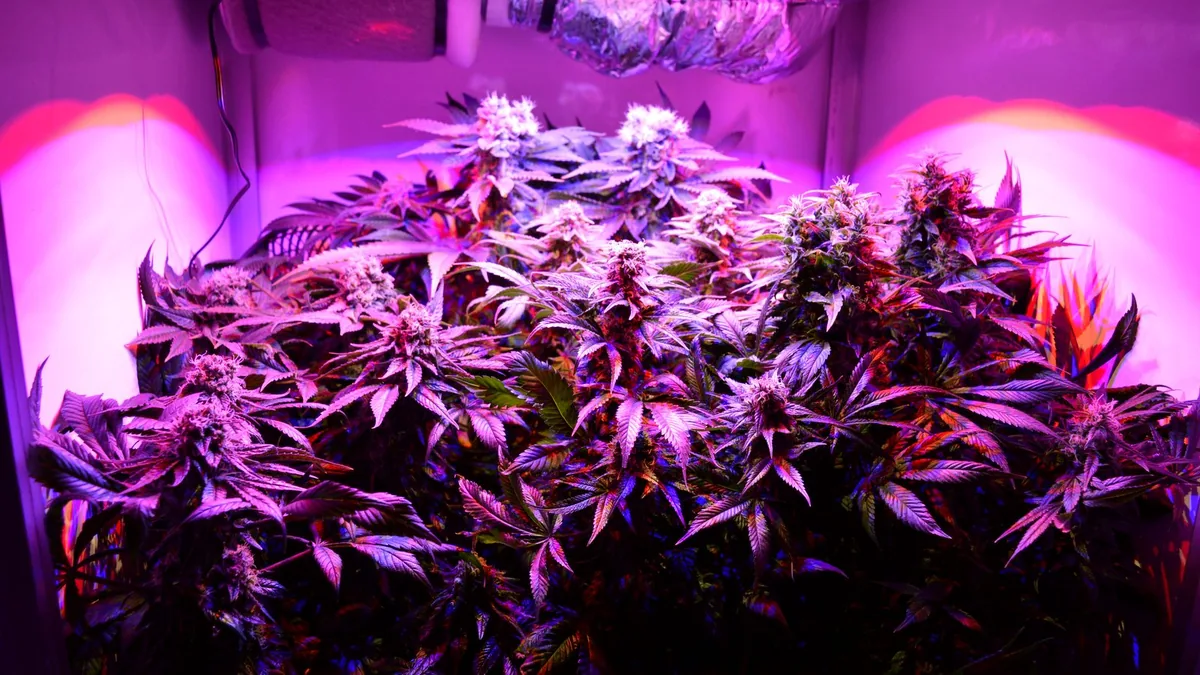
The plants still depend on the photoperiod. They keep growing leaves under long days and start flowering once the light drops to about twelve hours, which indoors means changing a timer and outdoors means waiting for late summer. Because the grower decides when that happens, the vegetative stage can be stretched or cut short, and the same plant can be kept as a mother and cloned.
Autoflowering seeds
Autoflowers flower on age rather than on light. The trait comes from Cannabis ruderalis, a wild, hardy population from Central Asia and southern Russia that evolved where the summer is too short to wait for changing day length.
Day-neutral flowering is a recessive trait, and that has two consequences a buyer notices. A plant only flowers on age if it inherits the trait from both parents. A breeder stabilising an autoflowering line therefore works to the third or fourth generation before it comes true, and crossing an autoflower with a photoperiod plant produces no autoflowers at all in the first generation.
That means one light schedule from start to finish, small plants, and no useful cloning: a cutting is as old as the plant it came from and flowers on that same clock.
What the index says about time and price
Autoflowers are widely sold on speed, and the figures in this catalogue support that only in part. The flowering stage itself is not much shorter, at a median of 56 days against 56 days for the feminized strains here. What autoflowers cut out is everything around that stage: no vegetative period of your choosing, no change of light, no waiting for the right season. Seed to harvest takes roughly eight to twelve weeks, against three to five months for a photoperiod plant.
They are also not the budget option. The median price per seed here is €7.10 for autoflowers and €7.10 for feminized, effectively the same.
| Feminized | Autoflower | Regular | |
|---|---|---|---|
| Strains here | 1252 | 780 | 143 |
| Sex | Female | Female | Both |
| Flowering trigger | 12 hours of light | Age | 12 hours of light |
| Median flowering stage | 56 days | 56 days | 56 days |
| Median price per seed | €7.10 | €7.10 | €7.00 |
| Cloning | Yes | No | Yes |
Choosing between them
If controlling the light is the problem, whether that is a windowsill, a balcony or a short northern summer, autoflowering takes that variable out of your hands. If you have the space and the time and want the most from each plant, photoperiod feminized seeds leave the schedule up to you. Regular seeds are for anyone who wants to breed, keep a line running, or pick a mother out of a population instead of accepting the single plant a feminized seed gives them.
Most listings state the type plainly. Where it matters, the feminized, autoflower and regular lists on this site are filtered on that field, with the price per seed beside each strain.