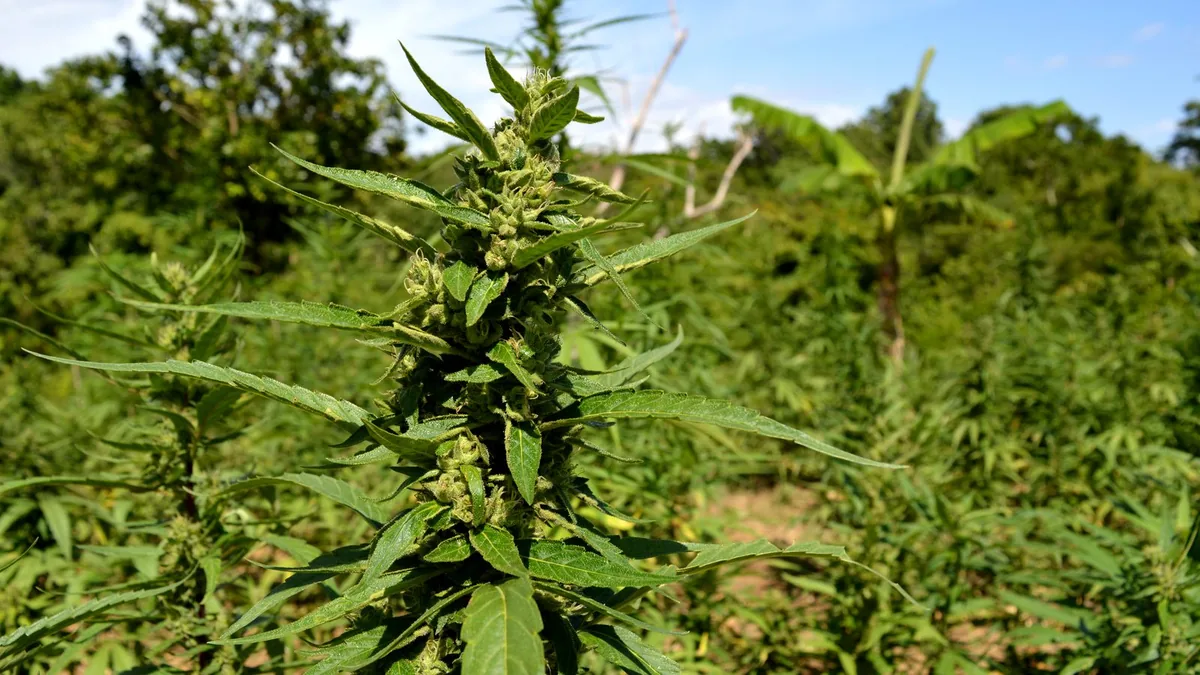
.webp)
Indoors you set the light. Outdoors the sky sets it, and the choice of strain follows from where you happen to live. A plant that finishes comfortably in Spain can still be in flower in a Dutch October, in the rain, and by then it is a different proposition altogether.
Day length does the deciding
Photoperiod plants start flowering once the nights are long enough, and that date is set by latitude rather than by the weather. The further north, the earlier that trigger arrives: at 47°N flowering starts roughly three to four weeks earlier than at 30°N for the same seed sown on the same day. In northern Europe most photoperiod varieties turn during August.
What they cannot do is finish sooner than their genetics allow, and that is where things go wrong. A variety that needs eleven weeks of flowering, starting in mid-August, is asking for dry, sunny weather into November from a climate that stops providing it in October.
The number to check before anything else
Flowering time, which every listing here states. Outdoors it is not a preference but a deadline. Count back from the week your autumn usually turns wet and you have the longest flowering time you can afford; anything above that is a gamble, however the strain is described.
Of the strains indexed here, 237 are marked for a mediterranean climate, 932 for temperate and 75 for cool or cold. Those labels come from the shops, and they are shorthand for exactly this question.
Botrytis, and why bud structure matters outdoors
The risk in a wet autumn is grey mould, botrytis. It starts inside dense flowers where the moisture cannot escape, and it can destroy a crop in its final fortnight. Tightly packed buds are the ones sold as impressive, and in a humid climate they are the ones that rot. Northern growers trade them for looser, airier flowers and mould-resistant genetics, and that is a real trade rather than a marketing line.
Two habits do most of the work: put the plants where they catch the morning sun, so the dew burns off early, and check them after every spell of rain rather than once a week.
Where autoflowers change the arithmetic
Autoflowering plants ignore day length and run on age, so the calendar no longer decides when they flower, only whether it is warm and bright enough while they do. Sown in late spring they finish in high summer, before the autumn damp arrives, and a second sowing can follow the first. In a short northern summer that often decides whether there is anything to harvest at all.
The guide to seed types covers what else that choice brings with it.
A rough northern European calendar
| When | What is happening |
|---|---|
| April to May | germination indoors or under cover, frost still a risk |
| Late May to June | out into the ground or final pots, vegetative growth |
| July | fastest growth, water becomes the daily job |
| August | day length shortens, photoperiod plants turn to flower |
| September | ripening, mould watch after rain |
| Late September to October | harvest for early finishers; anything later is a bet on the weather |
Latitude shifts every line of that table, and a fortnight either way is normal. Treat it as a shape rather than a schedule.
Choosing from the index
Climate labels narrow the field, flowering time settles it. The cool climate, temperate and mediterranean lists carry the shop's own classification, and each strain page states the flowering window next to the price per seed.