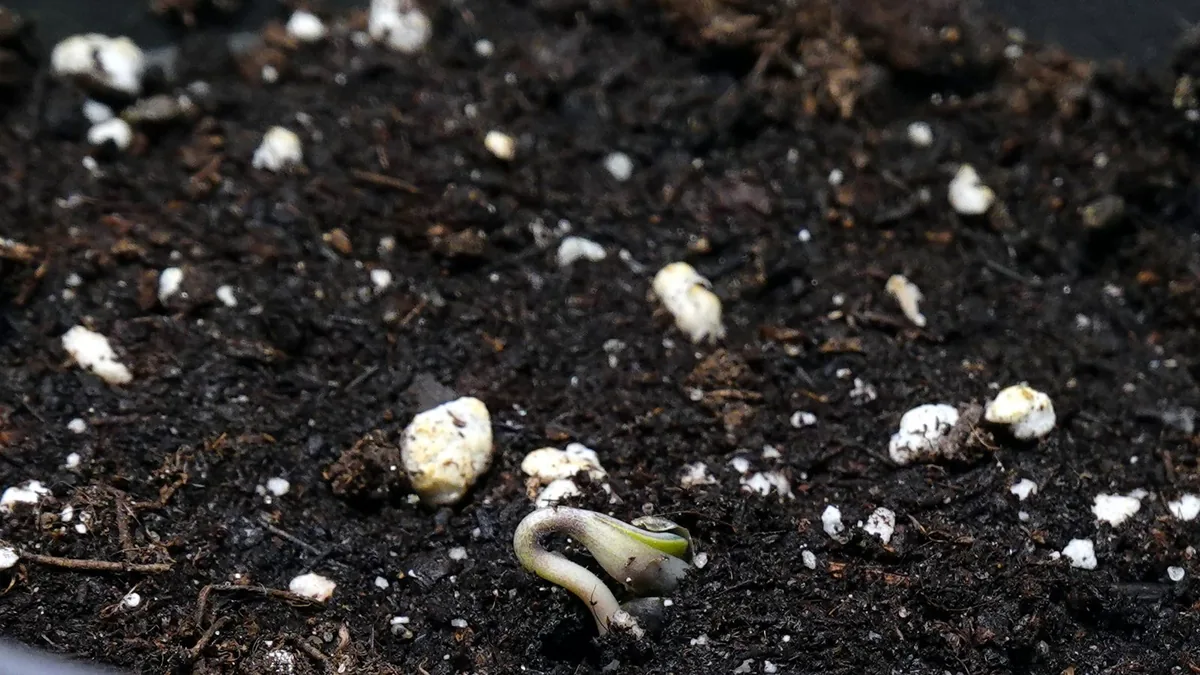

A seed is a live plant with the clock slowed down. Cold, dry and dark keep that clock slow and the seed alive for years. Warmth, damp and light speed it up, and the same seed can be dead inside a year.
The three that matter
Temperature. Cold is the strongest lever. A steady 5 to 8°C, which is an ordinary refrigerator, keeps metabolic activity to a crawl. Holding that temperature matters as much as the number itself: seeds moved in and out of the cold repeatedly do worse than seeds left at a stable room temperature, because every cycle pulls moisture through the shell.
Moisture. Around 10 to 30% relative humidity inside the container is the target. Damp is what turns a stored seed mouldy, and a sealed container with a silica gel packet holds a dry pocket of air far better than a paper envelope in a drawer.
Light and air. Both are easy to shut out, and doing so costs nothing: use an opaque, airtight container and keep it in the dark.
Get all three right and three to five years of good germination is a reasonable expectation, declining slowly after that. Get them wrong, a warm room, humid air, a windowsill, and the seeds can be unusable within a year.
The freezer question
Freezing works in professional gene banks because they dry seed to a precisely controlled moisture content first. Frozen seed with too much moisture forms ice crystals inside the cells, and the damage is not visible until nothing sprouts. Unless you can measure moisture content, a refrigerator gives you most of the benefit and none of that risk.
Condensation, the mistake that spoils good storage
Cold containers pull moisture out of warm room air the moment they are opened. Let a sealed container come to room temperature before opening it, then take out what you need and close it again. This single habit does more for a collection than any container upgrade.
What age does
Viability falls gradually rather than at a cliff edge. Older seed germinates more slowly, and a lower proportion of it germinates at all, which is why the usual advice for seed older than two or three years is to soak it before setting it to sprout. A seed that has not shown a taproot after seven days under good conditions, as described in the germination guide, is almost certainly dead rather than late.
Shell appearance says very little. Dark, striped, hard seeds are not reliably better than pale ones; colour varies by variety and by how the seed was dried.
Practical setup
Use an airtight jar or a sealed bag with a desiccant, label it with the strain and the date, and keep it at the back of the refrigerator, where the temperature is steadiest. Keeping the original packet inside the container keeps the name attached to the seed, which sounds obvious until a collection runs to a dozen varieties.
On those terms, buying seed you will not sprout for a year or two is perfectly reasonable, and the price per seed across the index shows you whether the saving is worth the wait.