.webp)
More quality is lost after the plant is cut than most growers expect. The compounds that carry the smell and the taste evaporate by their nature, and heat, air and time take them whether you are paying attention or not. The harvest is not the end of the grow; it is the beginning of the part that decides how the result tastes.
When to cut
Ripeness is read off the trichomes, the resin heads on the flower, through a loupe or a cheap microscope. Clear heads mean the plant is still filling out; milky white is the peak; amber means the THC has started breaking down into CBN, which is heavier and more sedating. Most growers cut somewhere between mostly milky and a scattering of amber, and adjust by preference from there.
What ripeness is not is a date on a calendar. A listing gives a flowering window because that is what the breeder saw, and it shifts with light, temperature and how hard the plant was pushed. Take it as the point at which to start looking, not the point at which to cut. Cutting early is the commonest mistake in the whole process, and you cannot see yourself making it.
Drying: slow and cool
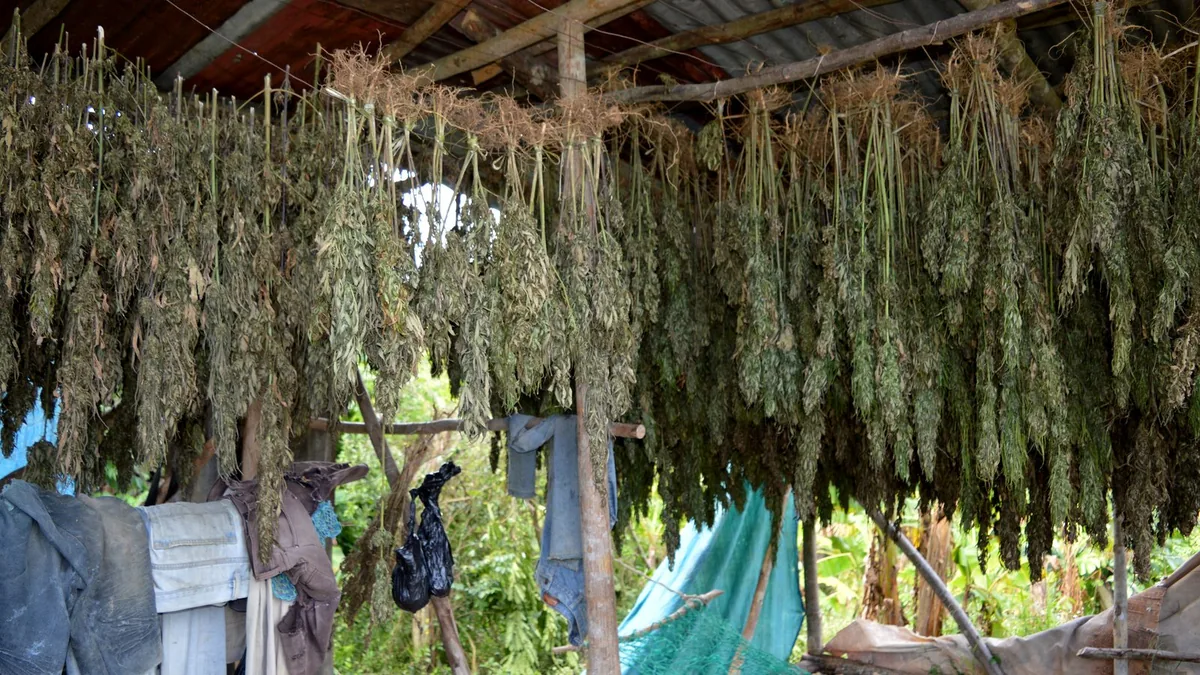
Aim for a slow dry in a dark, ventilated room at roughly 15 to 18°C and around 60% relative humidity, over ten to fourteen days. The old shorthand is the 60/60 rule, 60°F and 60% humidity, and it survives because terpene loss climbs sharply with temperature: dry at 21°C and a large part of the most volatile compounds is gone inside a week.
Air should move through the room rather than across the flowers. A fan aimed at hanging branches dries the outside while the inside stays wet, which is exactly what mould is waiting for.
Whole branches dry more slowly and more evenly than trimmed buds, which is the point of hanging them. When the small stems snap instead of bending, the drying is done.
Curing: the two weeks that do the work
Curing is storage at a controlled humidity while the moisture left inside the flower evens out and the chlorophyll keeps breaking down. Use sealed jars, filled about three quarters, held at 58 to 62% relative humidity.
Open them for a few minutes each day in the first week, and less often after that. Every opening costs a little aroma, so more is not better: you are balancing the moisture you let out against the smell you keep. Two weeks makes a noticeable difference, and most varieties settle somewhere between four and eight.
Keep jars dark and cool. Light and heat degrade cannabinoids after harvest as reliably as they do before it.
What goes wrong
Too fast. A warm, dry room finishes in three days and takes the smell with it. There is no way to put it back.
Too wet. Sealed too early, or in a damp room, and mould appears inside the jar. Anything affected is finished; do not attempt to rescue it.
Too much handling. Trichomes break off. Trim what needs trimming, once.
Where this connects
Flowering time per strain, which is where the plan starts, is stated on every listing here, and the indoor guide covers the stages leading up to this one. For outdoor grows the harvest window is set by the season rather than by choice, which the outdoor guide covers.